Dates checked November 24, 2026
Nebraska Crow Season 2026-27
Crows can be taken today under the Nebraska rules below, with each date tied to a source.
Updated November 25, 2026 · Source: Nebraska Game and Parks Commission
Sunflower field in bloom under sunset clouds, Banner County, Nebraska
Photo: Matthew Dillon (CC BY-SA 2.0)
The short version on crows
Figures were read on November 24, 2026.
Crow hunting is split into two windows, October 10 through December 10, 2026 and January 9 through March 11, 2027, and no daily or possession limit applies. Shooting hours for crow run from 30 minutes before sunrise to 60 minutes after sunset outside the waterfowl seasons, and electronic calls are allowed.
Crows are the one bird that does not need a Harvest Information Program number, so a hunter needs only the hunt permit and Habitat Stamp.
Which days the crow hunt covers
Read the Area column first, because some crow rows follow a zone, a unit or a highway line.
| Hunt | Where | First day | Last day | Status |
|---|---|---|---|---|
| Regular | Statewide | Oct. 10, 2026 | Dec. 10, 2026 | Open now |
| Regular | Statewide | Jan. 9, 2027 | March 11, 2027 | Not open yet |
More on every row
NGPC release or guide (2025-07-10); NGPC hunting page; checked November 24, 2026.
Where the crow hunt stands this week
As of November 25, 2026, 1 window stand open for crows; the one ending soonest closes December 10, 2026.
Still on the way: the regular row begins January 9, 2027 and ends March 11, 2027.
No later calendar is out yet; any new dates will come from the NGPC season releases.
Numbers that cap the crow take
The limit cells come from the 2025-26 guide and eRegulations tables, with the 2026-27 print still to check.
| Kind | Day limit | Possession |
|---|---|---|
| Crow | No limit | No limit |
NGPC limit entry (2025-07-10); 2025-26 Small Game and Waterfowl Guide; checked November 24, 2026.
Permits and prices for crows
Paperwork for the crow hunt starts with the annual hunt permit at $18 resident and $109 nonresident.
| What to buy | Resident price | Nonresident price |
|---|---|---|
| Annual hunt permit | $18 | $109 |
| Habitat Stamp | $25 | $25 |
NGPC fee table; NGPC draw release (2026-05-28); checked November 24, 2026.
All permit prices and big game draws have their own pages.
Sunrise and sunset math for crows
Shooting for crows is allowed from 30 minutes before sunrise to 60 minutes after sunset, so the opening and closing times in the table slide with the daylight.
The sample pairs Custer on Central Time with Box Butte on Mountain Time, and each time ends in its zone letters.
| Date | County | Opens | Closes |
|---|---|---|---|
| Oct. 10, 2026 | Custer | 7:14 a.m. CT | 8:08 p.m. CT |
| Oct. 10, 2026 | Box Butte | 6:28 a.m. MT | 7:21 p.m. MT |
| Nov. 9, 2026 | Custer | 6:49 a.m. CT | 6:27 p.m. CT |
| Nov. 9, 2026 | Box Butte | 6:04 a.m. MT | 5:38 p.m. MT |
| Dec. 10, 2026 | Custer | 7:24 a.m. CT | 6:10 p.m. CT |
| Dec. 10, 2026 | Box Butte | 6:40 a.m. MT | 5:21 p.m. MT |
Crow is the one bird whose shooting day ends an hour after sunset.
For a county of your own, the hours tool does the math. Hours tool for every county.
NGPC shooting hours; Small Game and Waterfowl Guide; checked November 24, 2026.
Crow: guns, tools and field conduct
Topic cards carry the rule as written, with months spelled out.
Before loading up for crows, know this about gear: any firearm or archery gear, and electronic calls are allowed.
Upland game birds and
Shooting from roads
Hunting near dwellings
Spotlighting
Trespass and permission
Predator control by landowners
Small Game and Waterfowl Guide; 2024 Big Game Guide; 2026 Turkey Guide; checked November 24, 2026.
County coverage for the crow hunt
From any county, at least one of these rows applies, and the county guides list the land. All county guides.
Public tracts that suit crows
Public land that fits the crow hunt includes wildlife management areas, open Fields and Waters and natural resources districts, with the record counts below.
| Land type | Records | Page |
|---|---|---|
| Wildlife management areas | 245 | Open list |
| Open Fields and Waters | 80 | Open list |
| Natural resources districts | 37 | Open list |
A county tally puts these five ahead: Lancaster County (25), Lincoln County (18), Cherry County (11), Seward County (10), Brown County (9).
Closed areas are listed separately and are never counted as hunting spots. Closed places.
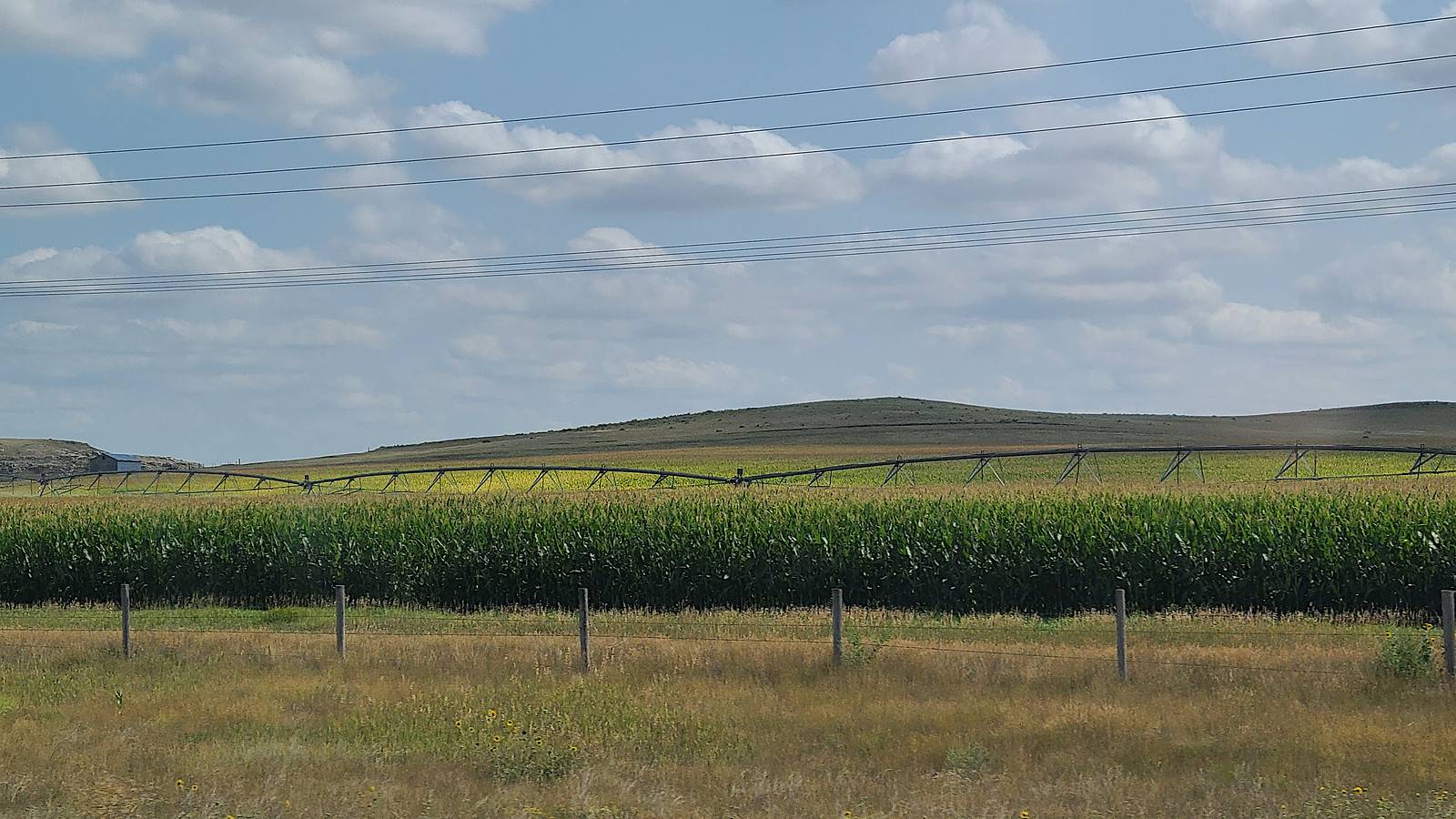
Green corn field stretching to the horizon under a cloudy sky, NebraskaPhoto: Don Henise (CC BY 2.0)

Green crop field with a farm building under blue sky, Kearney County, NebraskaPhoto: Hanyou23 (CC BY-SA 4.0)

Dirt road between green fields under a stormy sky, Cedar County, NebraskaPhoto: Tony Webster (CC BY 2.0)

Rows of green corn under hazy evening sky, Hamilton County, NebraskaPhoto: Don Henise (CC BY 2.0)
What people want to know on crows
Is a daily or season cap written for crows?
The 2025-26 guide sets crow: no limit, no limit. Confirm against the 2026-27 guide before the hunt.
Which calendar days fence in the crow season this fall and winter?
The earliest window for crows opens October 10, 2026 and the latest closes March 11, 2027; the table above lists every window in between.
When does the legal day begin and end for crows?
Try October 10, 2026 for crows. A shooter in Custer County may begin at 7:14 a.m. CT and must stop at 8:08 p.m. CT, and a shooter in Box Butte County may begin at 6:28 a.m. MT and must stop at 7:21 p.m. MT. The rule behind it: from 30 minutes before sunrise to 60 minutes after sunset.
How much will the permits for crows add up to?
Costs come from the fee table: annual hunt permit at $18 resident and $109 nonresident. Prices may change after the August 2026 fee decision, so confirm at checkout. Permit prices.
What state or federal tracts are open for the crow hunt?
See the land section above: it counts 245 wildlife management areas, 80 open Fields and Waters and 37 natural resources districts. Public land.
Which Nebraska counties does the crow season reach?
Yes, every one of the 93 counties falls within the crow rows.
May I use electronic calls on crow?
Yes. Electronic calls are allowed for crow, while they are prohibited for waterfowl in the fall seasons.
What is known about crow dates after this season?
No. Game and Parks has published no later dates, so this page prints none. NGPC hunting page.
When is the crow evening hour different?
Outside the waterfowl seasons, shooting may continue until 60 minutes after sunset. Legal hours by county.
Does a crow hunter need a Harvest Information Program number?
No. Crow has no registration number requirement.
Small Game and Waterfowl Guide; NGPC hunting page; checked November 24, 2026.
References behind the page
Rules change; the guides and season releases, read November 24, 2026, are the references.
NGPC species entry (2025-07-10); Small Game and Waterfowl Guide 2025-26 (2025-07-10); 2024 Big Game Guide (2024-05-07); 2026 Turkey Guide (2025-11-13); checked November 24, 2026.
Dates first, then the ground
Tap a button to browse counties, find public land and check the permit table.
Other photos on this page: greenebriar (Public domain); U.S. Geological Survey (CC0 1.0); PierreSelim (CC BY 3.0); U.S. Fish and Wildlife Service – Midwest Region (Public domain); Don Henise (CC BY 2.0); Hanyou23 (CC BY-SA 4.0); Tony Webster (CC BY 2.0); Don Henise (CC BY 2.0).