South Dakota › Species › Tundra swan
Dates, limits and legal gear
South Dakota Tundra swan Season 2026-27
Read the 2026-27 windows for tundra swans, then check the limit, license cost and hours before you head out.
Updated November 23, 2026 · Source: South Dakota Game, Fish and Parks
Northern shovelers feeding in a shallow wetland, Huron Wetland Management District, South Dakota
Photo: U.S. Fish and Wildlife Service Mountain-Prairie Region (Public Domain Mark 1.0)
What to know about tundra swans
Tundra swan is a drawing hunt: the season runs October 3, 2026 through January 8, 2027 in a set of open counties, and only hunters who applied and received a license may take a swan. The 2026 application window ran from June 17 to July 1 and has closed, so the license is not on sale now.
GFP projected 235 swans taken in 2025, and 35 of the 235 could not be placed in a county.
South Dakota tundra swan calendar
Each line is one window from the GFP key dates page and handbook, and the last column tests it against November 23, 2026.
| Season | Area | Opens | Closes | Today |
|---|---|---|---|---|
| Drawing season | Listed units | Oct. 3, 2026 | Jan. 8, 2027 | Open now |
Row details from GFP
GFP key dates page; GFP 2026 hunting handbook; checked November 23, 2026.
Where the tundra swan calendar stands
On November 23, 2026, 1 season window for tundra swans is open, and the first to close ends January 8, 2027.
No dates for the year after 2026-27 exist in the handbook, and none are printed on this page.
Open swan counties
GFP's swan report lists 27 counties with a projected 2025 harvest; the unit itself has 35 counties.
Tundra swan limits at a glance
| Animal | Per day | At one time |
|---|---|---|
| Tundra swan | 1 per license | Not listed |
The limit as GFP prints it: tundra swan: One per license.
GFP handbook entry; GFP key dates page; checked November 23, 2026.
Paperwork and fees for tundra swans
Prices in this section are read from the one GFP fee table for the 2026-27 license year, where the tundra swan permit is $15 for residents and $34 for nonresidents.
Nonresident waterfowl licenses are issued by lottery only, and the units are 00A, 00B, 00V, 00X, 00Y and 00Z.
| License or stamp | Resident | Nonresident |
|---|---|---|
| Tundra swan permit | $15 | $34 |
| Migratory bird certificate | $5 | $5 |
| Federal waterfowl e-stamp | $29 | $29 |
| Habitat Stamp, 18 and up | $10 | $25 |
GFP set these 2026 application windows by season, and the status column compares each with today.
| Drawing | Window | Status |
|---|---|---|
| Tundra Swan Season | June 17, 2026 to July 1, 2026 | Closed |
GFP fee table; license requirements; drawing rules; checked November 23, 2026.
When the tundra swan shooting day starts and ends
For tundra swans, South Dakota reads the day as from 30 minutes before sunrise to sunset; the rows below show what that comes to on the first, middle and last dates.
The two counties sit on different clocks, Day on CT and Butte on MT, and the letters stay on each time.
| Date | County | Opens | Closes |
|---|---|---|---|
| Oct. 3, 2026 | Day | 6:59 a.m. CT | 7:09 p.m. CT |
| Oct. 3, 2026 | Butte | 6:23 a.m. MT | 6:33 p.m. MT |
| Nov. 20, 2026 | Day | 7:05 a.m. CT | 4:57 p.m. CT |
| Nov. 20, 2026 | Butte | 6:27 a.m. MT | 4:22 p.m. MT |
| Jan. 8, 2027 | Day | 7:39 a.m. CT | 5:03 p.m. CT |
| Jan. 8, 2027 | Butte | 7:01 a.m. MT | 4:29 p.m. MT |
The statewide tool page has the same arithmetic for every county. Legal hours by county.
GFP shooting hours; handbook; checked November 23, 2026.
Which guns and tools GFP allows on tundra swans
These rules were read from the handbook and the administrative rules, and the cards keep their wording.
GFP's gear rule for tundra swans reads like this: Non-toxic shot is required, and only a hunter who applied for and received a license may shoot a swan.
Waterfowl, coots, snipe, cranes, swan
Road rights-of-way
Electronic calls
Closed areas
Shooting from vehicles
Public land use
GFP 2026 hunting handbook; ARSD 41:06; checked November 23, 2026.
Harvest numbers for the tundra swan hunt
Projected swan harvest in 2025 was small: 235 birds, led by Brown County at 43.
| County | Projected | Reported |
|---|---|---|
| Brown County | 43 | 23 |
| McPherson County | 39 | 21 |
| Clark County | 22 | 12 |
| Day County | 22 | 12 |
| Edmunds County | 19 | 10 |
| Marshall County | 13 | 7 |
| Hamlin County | 9 | 5 |
| Roberts County | 7 | 4 |
| Hand County | 6 | 3 |
| Campbell County | 4 | 2 |
| Deuel County | 4 | 2 |
| Faulk County | 4 | 2 |
GFP 2025 swan report (2026-02-12); GFP harvest surveys; checked November 23, 2026.
County list for the tundra swan hunt
35 counties appear in the tundra swan rows: 35 whole and 0 in part.
- Aurora CountyWhole county
- Beadle CountyWhole county
- Brookings CountyWhole county
- Brown CountyWhole county
- Brule CountyWhole county
- Buffalo CountyWhole county
- Campbell CountyWhole county
- Clark CountyWhole county
- Codington CountyWhole county
- Davison CountyWhole county
- Day CountyWhole county
- Deuel CountyWhole county
- Edmunds CountyWhole county
- Faulk CountyWhole county
- Grant CountyWhole county
- Hamlin CountyWhole county
- Hand CountyWhole county
- Hanson CountyWhole county
- Hughes CountyWhole county
- Hyde CountyWhole county
- Jerauld CountyWhole county
- Kingsbury CountyWhole county
- Lake CountyWhole county
- Marshall CountyWhole county
- McCook CountyWhole county
- McPherson CountyWhole county
- Miner CountyWhole county
- Minnehaha CountyWhole county
- Moody CountyWhole county
- Potter CountyWhole county
- Roberts CountyWhole county
- Sanborn CountyWhole county
- Spink CountyWhole county
- Sully CountyWhole county
- Walworth CountyWhole county
Finding ground for tundra swans in South Dakota
This guide lists 1,334 records in the land types most used for tundra swans, so a hunter has a spread of places to compare.
| Land type | Records | Page |
|---|---|---|
| Waterfowl Production Areas | 719 | Open list |
| Game Production Areas | 611 | Open list |
| National wildlife refuges | 4 | Open list |
| Wetland Management Districts | 5 | Open list |
The five counties with the most of these places are Day County (86), McPherson County (81), Marshall County (67), Clark County (60), Codington County (58).
Closed areas are kept apart from the hunting land lists. Closed places.
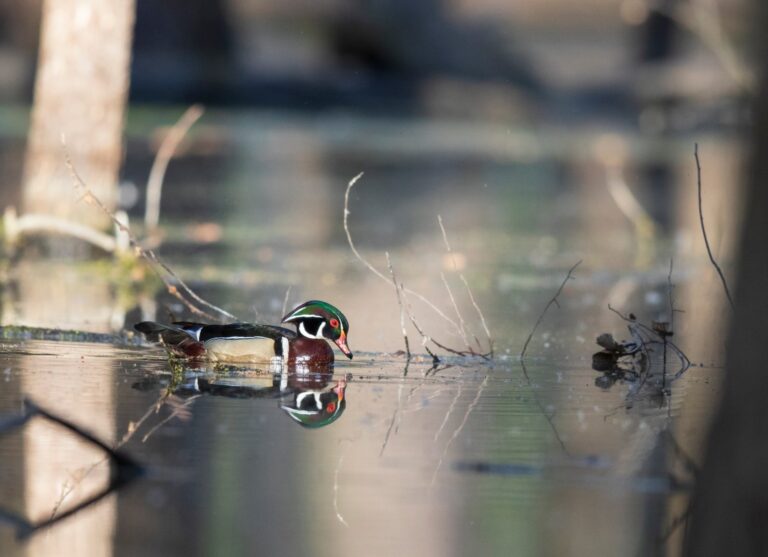
Wood duck drake on still waterPhoto: U.S. Fish and Wildlife Service – Midwest Region (Public domain)
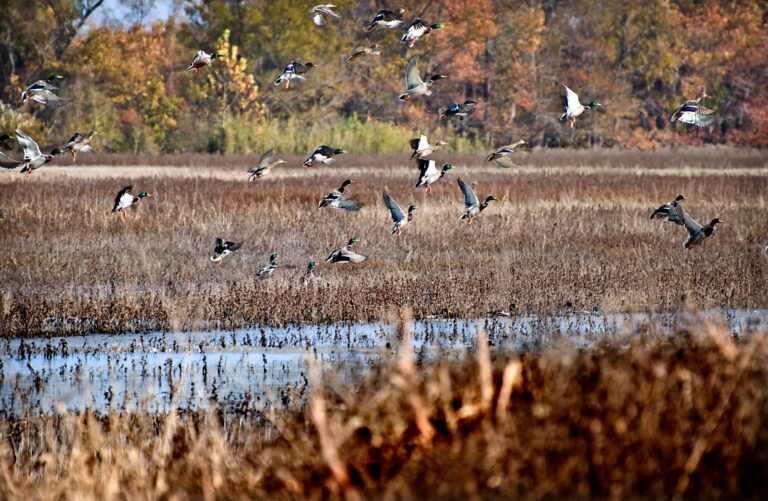
Flock of mallards taking flight over a marshPhoto: U.S. Fish and Wildlife Service – Midwest Region (Public domain)
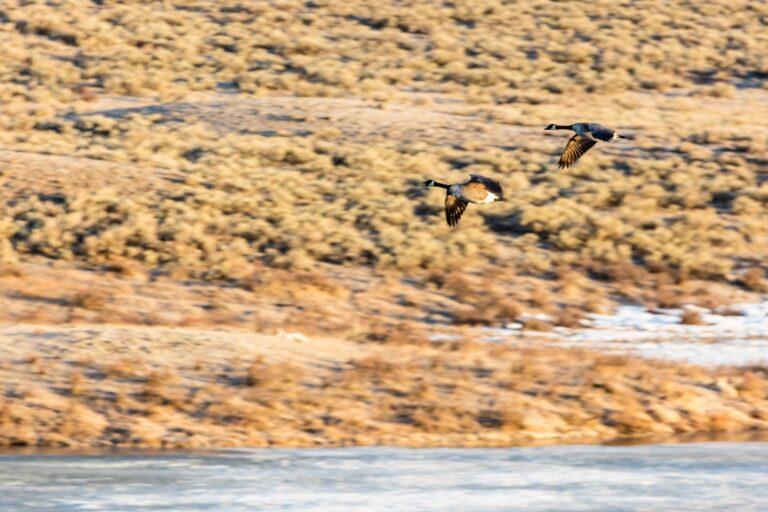
Canada geese flying low over a marshPhoto: Yellowstone National Park (Public domain)
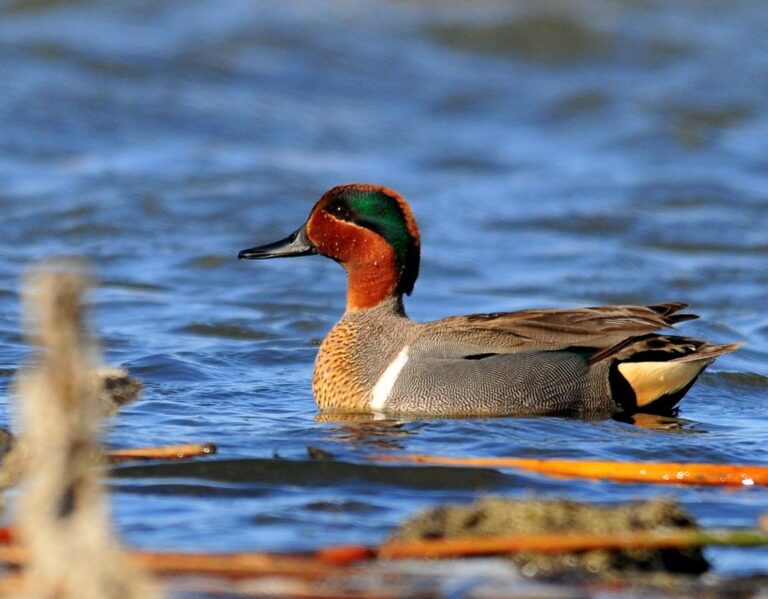
Green-winged teal on the waterPhoto: USFWS Mountain Prairie (Public domain)
Read before you go
What time may tundra swans be taken in the morning?
Day County on October 3, 2026: 6:59 a.m. CT to 7:09 p.m. CT. Butte County the same day: 6:23 a.m. MT to 6:33 p.m. MT. GFP's rule for tundra swans is from 30 minutes before sunrise to sunset.
Which counties does the tundra swan season cover?
The tundra swan rows reach 35 counties, listed in the counties section above.
What public ground exists for the tundra swan hunt?
Plenty, by count: 719 Waterfowl Production Areas, 611 Game Production Areas and 4 national wildlife refuges. Public land.
Has GFP posted dates for the next tundra swan season?
Not yet. The department lists one license year at a time. GFP key dates.
How do I get a tundra swan license?
By drawing only. The application window for 2026 ran June 17 to July 1 and has ended, and a Federal Waterfowl Stamp and State Migratory Bird Certificate are also required. Big game drawings.
Where were swans taken in 2025?
GFP's county table lists 27 counties, with Brown the highest at a projected 43 swans.
What are the opening and closing days for tundra swans?
The calendar for tundra swans runs from October 3, 2026 to January 8, 2027, in 1 window.
What does the tundra swan bag limit allow per day?
GFP sets tundra swans at tundra swan: One per license.
What will the paperwork for tundra swans cost a South Dakota hunter?
The fee table lists $15 resident and $34 nonresident for the tundra swan permit, and a Habitat Stamp is needed from age 18. License prices.
GFP 2026 hunting handbook; GFP key dates page; checked November 23, 2026.
What we read
Every date, limit and fee above was read from GFP pages and the handbook, last checked November 23, 2026.
GFP species entry (2026-09-28); GFP key dates page; GFP 2026 hunting handbook (2026-09-28); ARSD 41:06; checked November 23, 2026.
Pack list and next stop
A species page says when; a county page says where, so move to a county next.
Other photos on this page: U.S. Fish and Wildlife Service Mountain-Prairie Region (Public Domain Mark 1.0); U.S. Fish and Wildlife Service Mountain-Prairie Region (Public Domain Mark 1.0); USDA NRCS South Dakota (CC BY-SA 2.0); USFWS/Southeast (Public domain); U.S. Fish and Wildlife Service – Midwest Region (Public domain); U.S. Fish and Wildlife Service – Midwest Region (Public domain); Yellowstone National Park (Public domain); USFWS Mountain Prairie (Public domain).