Home › Washington › Hunting laws
WDFW pamphlets and Washington law
Washington Hunting Laws and Rules
The rules every Washington hunter meets: 20 method and conduct rules, 6 weapon rules, protected species and the penalties the law prints.
Updated November 24, 2026 · Source: Washington Department of Fish and Wildlife
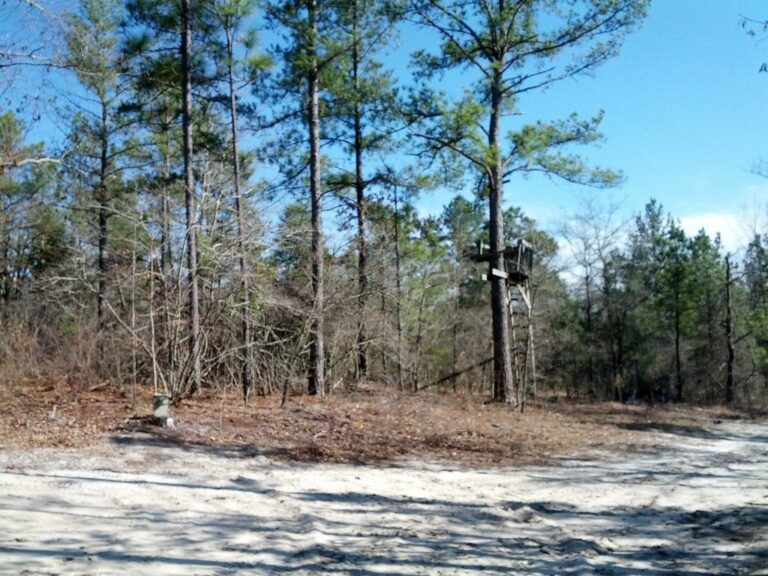
Deer stand built in the trees
Photo: Peter Sheik (CC BY 2.0)
Method and conduct rules
WDFW prints 20 method and conduct rules, and 12 of the most asked ones are summarized below, each with its first sentence from the pamphlet or the WAC.
Artificial lights and night vision
Hunting big game with the aid of a spotlight, other artificial light or night vision equipment while in possession or control of a firearm, bow or crossbow is prohibited.
Hunting from vehicles, boats and aircraft
Hunting wildlife from a motorized vehicle with the aid of a light or night vision is prohibited.
Shooting from or along public highways
It is illegal to discharge a firearm from, across or along the maintained portion of a public highway or from a moving vehicle.
Party hunting
Party hunting is illegal for big game and turkey: it is unlawful to shoot or kill big game or turkeys for another person, to kill one with the intention that another tag it, or to tag one that another person killed (exception: hunters with disabilities who have a designated hunting companion).
Bear baiting
It is unlawful to take, hunt or attract black bear with the aid of bait.
Baiting and feeding deer, elk and moose
Statewide, it is unlawful to hunt deer, elk or moose using bait, and unlawful to feed them or place food that makes them congregate.
Use of electronic calls
The pamphlet prohibits the use of electronic calls to hunt turkey, deer and waterfowl, except during the white goose-only (snow and Ross's goose) season dates.
Waste of game
Game animals and game birds that have been taken may not be recklessly wasted.
Posted private land
It is unlawful to hunt in areas posted "Hunting Only by Written Permission" without a permission card signed by the landowner on your person, to hunt behind a Safety Zone sign, or to drive behind a No Unauthorized Vehicles sign.
State lands
Most state lands are open to hunting unless closed by state, local or municipal law.
Colville Indian Reservation
The taking or hunting of big game or grouse within the Colville Indian Reservation boundaries, and trapping of furbearers there, is prohibited under the state pamphlet (tribal lands are closed unless a tribal license is held).
Shotgun plug
A shotgun capable of holding more than three shells must be plugged with a one-piece filler incapable of removal without disassembling the gun so total capacity does not exceed three shells.
Sources: RCW 77.15.450; 2026 big game pamphlet, PDF page 76; 2026 big game pamphlet, PDF page 73. Checked: each figure laid beside the WDFW text on November 23, 2026. Source dated November 23, 2026.
Hunter orange and pink
Modern firearm deer and elk hunters wear fluorescent orange or pink, and archers and muzzleloaders wear it only where a modern firearm season overlaps.
A minimum of 400 square inches of fluorescent hunter orange and/or fluorescent hunter pink exterior clothing worn above the waist and visible from all sides; a hat alone does not meet the requirement; a combination of both colors may be used. Not required while hunting in a unit limited to muzzleloading or archery with a valid muzzleloader or archery deer or elk tag; required for archers and muzzleloaders in areas that overlap modern firearm deer or elk seasons (including archery hunters in GMUs marked h).
Sources: WDFW hunter orange page; 2026 big game pamphlet, PDF page 73. Checked: each figure laid beside the WDFW text on November 23, 2026. Source dated November 23, 2026.
Weapons by season type
WAC 220-414 sets 6 weapon rules, and the first rule in each column is shown here; the pamphlet pages list the rest.
| Season | Legal | Not legal |
|---|---|---|
| big game (modern firearm) | Centerfire rifles of at least .24 caliber (6 mm) for big game, and at least .22 centerfire for cougar. | Rimfire rifles and handguns. |
| Bow of a draw weight that meets the pamphlet minimum. | Electrical devices on the bow other than illuminated nocks. | |
| big game (muzzleloader) | Single or double barrel rifle or smooth-bore of .40 caliber or larger for deer (buckshot #1 or larger allowed in .60 caliber or larger smoothbores) and .45 caliber or larger for other big game. | Telescopic sights above 1x magnification. |
| Shotguns up to 10 gauge, plugged to hold no more than three shells. | Shotguns holding more than three shells. | |
| Nontoxic shot only when hunting waterfowl, coot or snipe, and for upland birds, mourning dove and band-tailed pigeon on listed WDFW areas where pheasants are released and in the listed nontoxic shot zones. | Lead shot in those situations. | |
| all big game | None: infrared, night vision and thermal imaging equipment may not be used or possessed while hunting, spotting or locating big game (trail cameras excepted). | Night vision, thermal imaging, laser sights projecting a beam onto the target, and radio or GPS telemetry equipment (per the pamphlet for lasers). |
Sources: WAC 220-414-020; 2026 big game pamphlet, PDF page 73; 2026 game bird pamphlet, PDF page 50. Checked: each figure laid beside the WDFW text on November 23, 2026. Source dated November 23, 2026.
Protected and closed species
6 groups of species are protected or closed, including the gray wolf and Canada lynx, swans and the greater sage-grouse.
Protected, group 1
Pronghorn are classified as a game species in Washington, but the Fish and Wildlife Commission currently authorizes no pronghorn harvest. Small groups reintroduced on the Yakama and Colville Reservations may be seen, and pronghorn distribution overlaps mule deer.
Protected, group 2
Endangered species named in the pamphlet include pygmy rabbit, fisher, gray wolf, grizzly bear, woodland caribou, Canada lynx and Cascade red fox (and several whales and sea turtles)
Protected, group 3
Wolves and lynx are in Washington and are protected by state and federal law, so they cannot be shot or killed.
Protected, group 4
Other protected wildlife listed in the pamphlet (sensitive and other species) includes sandhill crane, western gray squirrel, Columbian sharp-tailed grouse, greater sage-grouse and tufted puffin.
Protected, group 5
Swans: season closed statewide.
Protected, group 6
Clark, Cowlitz, Pacific and Wahkiakum counties are closed to hunting for Columbian white-tailed deer, and the Cathlamet area (within GMUs 506 and 530) is closed to all deer and elk hunting except by special permit.
Sources: 2026 big game pamphlet, PDF page 75; 2026 big game pamphlet, PDF page 76. Checked: each figure laid beside the WDFW text on November 23, 2026. Source dated April 13, 2026.
Penalties
The law lists 5 penalty topics, and the criminal wildlife penalty assessment alone ranges up to $6,000 for trophy elk and deer.
| Offense | What the law prints |
|---|---|
| Second degree (no license, tag or permit. | |
| Criminal wildlife penalty assessment | On conviction under RCW 77.15.410 the court must assess $4,000 for moose, mountain sheep, mountain goat and endangered species. |
| Second degree is a misdemeanor and first degree (taking or possessing twice the bag or possession limit) is a gross misdemeanor. | |
| Spotlighting big game | Second degree is a gross misdemeanor with a two-year suspension of hunting privileges. |
| Unlawful transportation of wildlife | Failing to affix and notch a big game transport tag, or illegally moving big game, is charged under RCW 77.15.290. |
Sources: RCW 77.15.410; RCW 77.15.420; RCW 77.15.290. Checked: each figure laid beside the WDFW text on November 23, 2026. Source dated November 23, 2026.
Bait and electronic calls
Bait is banned for deer, elk, moose and bear, and game birds may not be hunted over bait.
Deer, elk and moose
Baiting deer, elk and moose for hunting is banned statewide, including scent lures derived from cervid urine or glandular material.
Game birds
Game birds may not be hunted over bait (salt, grain or other feed that could lure game birds)
Electronic calls
Electronic calls are illegal for hunting turkey, deer and waterfowl except during white goose-only (snow and Ross' goose) season dates.
Sources: WAC 220-414-030. Checked: each figure laid beside the WDFW text on November 23, 2026. Source dated November 23, 2026.
Chronic wasting disease
WDFW reports chronic wasting disease in Spokane and Pend Oreille counties, and the carcass transport rule sits on the tagging page.
CWD counties
Spokane and Pend Oreille counties are the two the data lists.
Carcass rule
Whole deer, elk, moose and caribou carcasses taken outside Washington may not be brought into the state.
Sources: WDFW CWD page; WAC 220-413-030. Checked: each figure laid beside the WDFW text on November 23, 2026. Source dated November 23, 2026.

Elevated hunting stand at the edge of a field and woodsPhoto: Calistemon (CC BY-SA 4.0)
Elevated deer stand at a field edgePhoto: colmmcsky (CC BY-SA 2.0)

Hunter in blaze orange looking through a rifle scope from a deer stand in the woodsPhoto: Maslowski, Steve, USFWS (Public domain)

Bull moose standing among shrubs and tall conifers, Colville National Forest, WashingtonPhoto: U.S. Forest Service- Pacific Northwest Region (Public Domain Mark 1.0)
More Washington hunting pages
Hunting law questions answered
May I use bait for deer or elk?
Baiting deer, elk and moose for hunting is banned statewide, including scent lures derived from cervid urine or glandular material.
May I use an electronic call?
Electronic calls are illegal for hunting turkey, deer and waterfowl except during white goose-only (snow and Ross' goose) season dates.
What hunter orange is required?
A minimum of 400 square inches of fluorescent hunter orange and/or fluorescent hunter pink exterior clothing worn above the waist and visible from all sides.
May I hunt with a spotlight?
Hunting big game with the aid of a spotlight is unlawful while in possession or control of a firearm.
Is party hunting legal?
Party hunting is illegal for big game and turkey for big game and turkey.
May I shoot from a vehicle?
It is illegal to discharge a firearm from, across or along the maintained portion of a public highway or from a moving vehicle.
Is there a limit on shotgun capacity?
A shotgun capable of holding more than three shells must be plugged with a one-piece filler incapable of removal without disassembling the gun so total capacity does not exceed three shells.
Where must I have written permission?
It is unlawful to hunt in areas posted "Hunting Only by Written Permission" without a permission card signed by the landowner on your person, to hunt behind a Safety Zone sign, or to drive behind a No Unauthorized Vehicles sign.
Are state parks open to hunting?
No. State parks are closed to hunting and trapping, while most other state lands are open unless closed by state, local or municipal law.
Is lead shot legal for ducks?
Nontoxic shot only when hunting waterfowl, coot or snipe, and for upland birds, mourning dove and band-tailed pigeon on listed WDFW areas where pheasants are released and in the listed nontoxic shot zones.
Which species are protected?
6 groups, including gray wolf, Canada lynx and grizzly bear, with swans closed statewide.
What is the penalty for unlawful big game hunting?
Second degree (no license, tag or permit.
Sources: 2026 big game pamphlet, PDF page 76; WAC 220-414-020. Checked: each figure laid beside the WDFW text on November 23, 2026. Source dated November 23, 2026.
Read the pamphlet
Most Washington rules hang on a GMU, a goose area or a side of the Cascades, and where a page here read one it says so and links the pamphlet.
Other photos on this page: USFWS Mountain Prairie (Public domain); Alan Levine (CC BY 2.0); Intermountain Region US Forest Service (Public domain); USFWS/Southeast (CC BY 2.0).