Home › Washington › Game management units › Region 1 Eastern › GMU 169 Wenaha
2026-27 rows and 2025 harvest estimates
Washington GMU 169 Wenaha Hunting
WDFW prints GMU 169 Wenaha with a county list in its heading; this page sets that list beside the 2026-27 season rows, permit hunts and public land for Columbia, Garfield and Asotin counties.
Updated November 24, 2026 · Source: Washington Department of Fish and Wildlife
Grassy ridge line with scattered conifers in the Wenaha-Tucannon Wilderness, Umatilla National Forest, Washington, scenery only, which does not mark any unit line
Photo: U.S. Forest Service- Pacific Northwest Region (Public Domain Mark 1.0)
GMU 169 in brief
GMU 169 Wenaha is a 100 series unit that WDFW files under Region 1 Eastern, and it lies in eastern Washington. Counties in the heading: Columbia, Garfield and Asotin, 3 in all. Season tables for 2026-27 carry 8 rows that name GMU 169, with white-tailed deer, mule deer, elk, black bear and turkey among them. The drawing tables add 1 hunt for it.
Sources: WDFW e-regulations GMU list; 2026-27 big game pamphlet; WDFW season tables (Washington Department of Fish and Wildlife), read November 23, 2026.
GMU 169 and the counties in its heading
These are the 3 counties WDFW prints for GMU 169; the counts show how crowded each county is with other GMUs.
| County | WDFW region | GMUs there | County seat |
|---|---|---|---|
| Columbia County | Region 1 Eastern | 7 | Dayton |
| Garfield County | Region 1 Eastern | 8 | Pomeroy |
| Asotin County | Region 1 Eastern | 7 | Asotin |
A county is normally only partly inside a unit, and the list gives no share, so this page prints none. Waterfowl rules follow Goose Management Area 5 in these counties. 9 areas for deer or elk permit hunts share these counties.
Sources: WDFW e-regulations GMU list (Washington Department of Fish and Wildlife), read November 23, 2026. The county list is the heading printed in the WDFW GMU list, as of May 1, 2026.
Hunting windows listed for GMU 169
The table lists every dated window WDFW prints for GMU 169, one line each, with the animal that is legal on that line. Across all rows, the earliest day is August 1, 2026 and the latest is December 31, 2026. WDFW ties each window to a legal animal, here 3-point minimum and spike bull.
| Game | Season | Opens | Closes | Today | Legal animal |
|---|---|---|---|---|---|
| White-tailed deer | Early archery | Sept. 1, 2026 | Sept. 25, 2026 | 3-point minimum | |
| White-tailed deer | Modern firearm | Oct. 17, 2026 | Oct. 27, 2026 | 3-point minimum | |
| Mule deer | Early archery | Sept. 1, 2026 | Sept. 25, 2026 | 3-point minimum | |
| Mule deer | Modern firearm | Oct. 17, 2026 | Oct. 27, 2026 | 3-point minimum | |
| Elk | Early archery | Sept. 12, 2026 | Sept. 24, 2026 | Spike bull | |
| Elk | Modern firearm | Oct. 31, 2026 | Nov. 8, 2026 | Spike bull | |
| Black bear | Fall | Aug. 1, 2026 | Nov. 15, 2026 | See pamphlet | |
| Turkey | Fall | Sept. 1, 2026 | Dec. 31, 2026 | See pamphlet |
Sources: WDFW season tables; 2026-27 big game pamphlet; WDFW GMU list (Washington Department of Fish and Wildlife), read November 23, 2026. The Today column fills in from your own date in the browser.
First and last light in GMU 169
Legal light for deer, elk and bear starts thirty minutes ahead of sunrise and ends thirty minutes after sunset; the times below are for October 17, 2026.
| County | First light | Last light | WDFW chart start | WDFW chart end |
|---|---|---|---|---|
| Columbia County | 6:40 a.m. PT | 6:34 p.m. PT | 6:45 a.m. PT | 6:40 p.m. PT |
| Garfield County | 6:39 a.m. PT | 6:32 p.m. PT | 6:45 a.m. PT | 6:40 p.m. PT |
| Asotin County | 6:37 a.m. PT | 6:31 p.m. PT | 6:45 a.m. PT | 6:40 p.m. PT |
The first pair of columns is worked out for the county center, and the pair headed WDFW chart copies the printed chart; the two can differ by a few minutes.
Hours rule from the WDFW shooting hours page; checked November 23, 2026. Legal hours for any county and day.
GMU 169 in the drawing tables
WDFW lists 1 special permit hunt here for deer, and the table prints the choice number, dates and permits as the tables give them.
| Choice | Hunt | Game | Category | Dates | Permits | Legal |
|---|---|---|---|---|---|---|
| 1235 | Wenaha | deer | Buck Deer Hunts | Sept. 26-Oct. 4 | 20 | 3 pt. min. |
The permit count is the figure in the hunt table; nothing here says how likely a draw is.
Sources: WDFW special permit tables; special permit drawings (Washington Department of Fish and Wildlife), read November 23, 2026.
Estimated 2025 harvest in GMU 169
Harvest tables for 2025 name GMU 169 on 5 rows; they cover black bear, deer and elk and count animals by GMU.
| Report | Antlered or male | Antlerless or female | Total | Bear hunters |
|---|---|---|---|---|
| Deer, combined | 9 | 0 | 9 | Not applicable |
| Deer, special permits | 3 | 0 | 3 | Not applicable |
| Elk, combined | 7 | 0 | 7 | Not applicable |
| Elk, special permits | 5 | 0 | 5 | Not applicable |
| Black bear, general | 8 | 0 | 8 | 73 |
These are estimates for 2025 reported by hunters, so treat them as a scale and not an exact count; the 2026 season harvest has not been published.
Harvest estimates from the WDFW 2025 game harvest reports (deer, combined report; deer, special permits report; elk, combined report; elk, special permits report; black bear, general report); read November 23, 2026. Figures are estimates for one GMU and are never added into a county.
Bear and cougar areas around Wenaha
WDFW groups GMU 169 into Black Bear Management Unit 3, called Southeast; the printed season is August 1-November 15 with a limit of 2. In the cougar tables GMU 169 is hunt area 13, with a cap of 3 and closure by notice when that number is reached.
Sources: WDFW season tables; 2026-27 big game pamphlet (Washington Department of Fish and Wildlife), read November 23, 2026.
Nearby units on the list
Matching on the county list, the GMUs closest to GMU 169 are the following.
| GMU | Shared counties | WDFW region |
|---|---|---|
| GMU 145 Mayview | Garfield and Asotin | Region 1 Eastern |
| GMU 149 Prescott | Columbia and Garfield | Region 1 Eastern |
| GMU 163 Marengo | Columbia and Garfield | Region 1 Eastern |
| GMU 166 Tucannon | Columbia and Garfield | Region 1 Eastern |
| GMU 172 Mountain View | Garfield and Asotin | Region 1 Eastern |
| GMU 175 Lick Creek | Garfield and Asotin | Region 1 Eastern |
Check each neighbor page for its own season rows before you plan a move.
Public acreage tied to GMU 169
The land records tie 13 public hunting places to GMU 169, including 3 WDFW wildlife areas, 8 WDFW wildlife area units, 1 DNR state trust land and 1 national forest; the table shows the largest by acres.
| Area | Kind | County | Acres |
|---|---|---|---|
| DNR state trust land | Okanogan | 2,831,422 | |
| National forest | Columbia | 311,022 | |
| Asotin Creek Wildlife Area | WDFW wildlife area | Asotin | 36,500 |
| Chief Joseph Wildlife Area | WDFW wildlife area | Asotin | 25,037 |
| WDFW wildlife area unit | Asotin | 20,437 | |
| W.T. Wooten Wildlife Area | WDFW wildlife area | Columbia | 17,000 |
| WDFW wildlife area unit | Columbia | 16,755 | |
| WDFW wildlife area unit | Asotin | 12,822 |
Acres are each record on its own and are never added together, because a wildlife area and its units overlap. Tribal land appears in the county data (Umatilla Off-Reservation Trust Land) as a note, with no claim here about access or rules.
Land records from WDFW wildlife area pages, DNR listings and federal agency pages; acreage from each managing agency; read November 23, 2026.
Towns, stores and the WDFW office for GMU 169
Towns ranked by Census 2024 population for the counties in the heading, then the services the guide lists there.
| Town | County | People, 2024 |
|---|---|---|
| Dayton | Columbia | 2,471 |
| Pomeroy | Garfield | 1,471 |
| Asotin | Asotin | 1,192 |
| Anatone | Asotin | 0 |
| Pataha | Garfield | 0 |
| Services listed | Count |
|---|---|
| Meat processors | 2 |
| Taxidermists | 0 |
| Sporting goods | 6 |
| Guides and preserves | 1 |
The Eastern regional office of WDFW, in Spokane Valley, serves Region 1 Eastern; its phone is (509) 892-1001 and its address is 2315 North Discovery Place.
Population from the Census Bureau 2024 estimates; services from public listings and WDFW lists; office from the WDFW regions page, read November 23, 2026. Counts cover the whole county.
GMU 169: orange, tagging and disease rules
- Hunter orange in Washington is defined by WDFW in these words: A minimum of 400 square inches of fluorescent hunter orange and/or fluorescent hunter pink exterior clothing worn above the waist and visible from all sides; a hat alone does not meet the requirement; a combination of both colors may be used. Not required while hunting in a unit limited to muzzleloading or archery with a valid muzzleloader or archery deer or elk tag; required for archers and muzzleloaders in areas that overlap modern firearm deer or elk seasons (including archery hunters in GMUs marked h).
- After the shot, the tag rule reads as follows. Tag the animal immediately (paper tag: cut out the month and day of kill; electronic: notch in MyWDFW and write the confirmation number and date on durable material attached to the carcass); evidence of sex must stay naturally attached; the tag must stay with the meat until eaten (WAC 220-413-020, 220-413-090).
- WDFW treats every 100-series unit as a CWD testing and transport area, and that includes GMU 169; read the sample and carcass rules below before you hunt.
- A Discover Pass is required at State Parks and DNR-managed lands; annual hunting licenses include a Vehicle Access Pass for WDFW-managed lands.
From the 2026-27 big game pamphlet, the WDFW CWD page and the WDFW CWD rules page, read November 23, 2026. Hunting laws, tagging and transport and CWD counties.
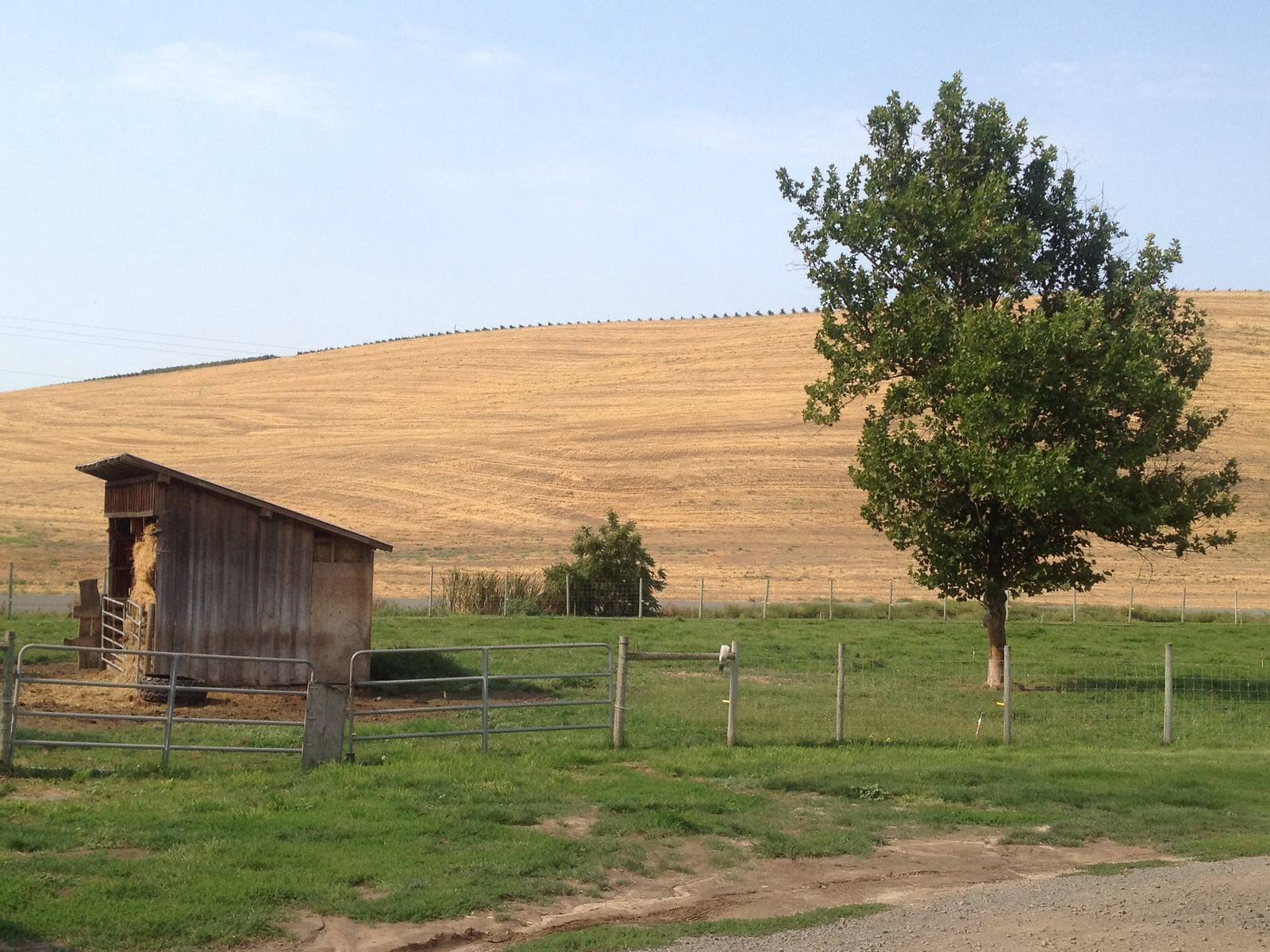
Wheat field with a weathered shed and a lone tree, Walla Walla County, WashingtonPhoto: Jameson Fink (CC BY 2.0)

Sandy dune slope and rolling grassland in the Juniper Dunes Wilderness, Franklin County, WashingtonPhoto: Bureau of Land Management Oregon and Washington (CC BY 2.0)
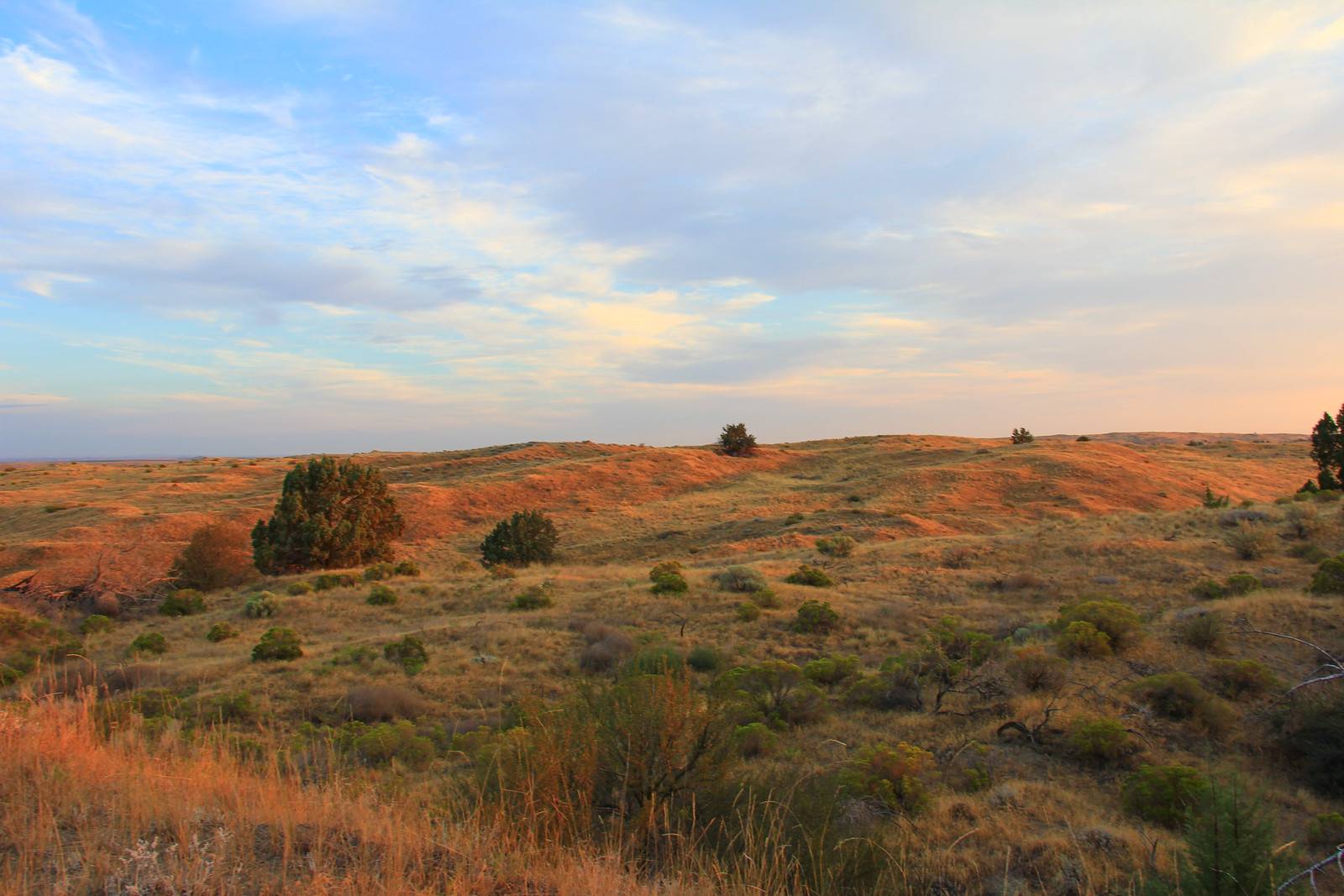
Rolling orange dunes and sagebrush at sunrise, Juniper Dunes Wilderness, Franklin County, WashingtonPhoto: Bureau of Land Management Oregon and Washington (CC BY 2.0)

Orange grasses on the dunes at sunrise under scattered cloud, Juniper Dunes Wilderness, Franklin County, WashingtonPhoto: Bureau of Land Management Oregon and Washington (CC BY 2.0)
Questions hunters bring up on Wenaha
Is CWD testing required in GMU 169?
Mandatory sampling covers all 100-series units, including GMU 169.
Where can I hunt on public land near GMU 169?
13 records are attached to the unit and Washington DNR state trust lands leads by acreage.
Why does GMU 169 Wenaha show harvest by GMU and not by county?
Harvest stays with GMU 169; county pages leave big game harvest out because counties and GMUs do not line up.
Where does GMU 169 sit by county?
It is the unit that touches Columbia, Garfield and Asotin, under Region 1 Eastern.
Is the whole county part of GMU 169 Wenaha?
The list says which counties appear in the heading and nothing about how much of each, so read the WDFW map for the line.
Which WDFW region manages GMU 169?
Call Region 1 Eastern in Spokane Valley at (509) 892-1001; that office covers GMU 169.
What seasons does GMU 169 have?
8 Rows name GMU 169: white-tailed deer, mule deer, elk, black bear and turkey, starting August 1, 2026.
How early can I hunt in GMU 169?
All 39 counties keep Pacific Time (PT). Big game light begins half an hour before sunrise and ends half an hour after sunset.
Can I apply for a hunt in GMU 169 Wenaha?
The general rows need no drawing, and 1 special permit hunt also name GMU 169; those need a drawn permit.
How many animals were taken in GMU 169 Wenaha in 2025?
Estimated 2025 total for the deer, combined line: 9, reported for GMU 169 alone.
How much orange does WDFW require in GMU 169?
The orange rule for firearm hunters reads: A minimum of 400 square inches of fluorescent hunter orange and/or fluorescent hunter pink exterior clothing worn above the waist and visible from all sides; a hat alone does not meet the requirement; a combination of both colors may be used.
Where is a harvest from Wenaha reported?
Tag the animal immediately (paper tag: cut out the month and day of kill; electronic: notch in MyWDFW and write the confirmation number and date on durable material attached to the carcass); evidence of sex must stay naturally attached; the tag must stay with the meat until eaten (WAC 220-413-020, 220-413-090).
Sources: WDFW e-regulations GMU list; 2026-27 big game pamphlet; WDFW season tables (Washington Department of Fish and Wildlife), read November 23, 2026. Answers use the unit data and the rules read on that date.
Other photos on this page: Jeff Hollett (Public Domain Mark 1.0); Jeff Hollett (CC0 1.0); Juliana Chong (CC BY 2.0); U.S. Fish and Wildlife Service – Midwest Region (Public domain).