Home › Washington › Season dates › Nonresident Hunting
Visiting hunters, license year 2026-27
Washington Nonresident Hunting License and Rules
A nonresident pays $599.07 for a deer license and $685.60 for an elk license, and anyone who has lived in Washington fewer than 90 days counts as a nonresident.
Updated November 24, 2026 · Source: Washington Department of Fish and Wildlife
Hunter in a blaze orange vest sitting in a climbing tree stand in hardwoods
Photo: Department of the Interior. U.S. Fish and Wildlife Service. National Conservation Training Center. 10/1997-8888 (Public domain)
How the 90 day residency test works
WDFW treats a person as a resident only after 90 days of a permanent place of abode in Washington, and anyone short of that pays the nonresident column.
Residency
Resident: a person who has maintained a permanent place of abode in Washington for at least 90 days immediately before applying, has shown intent to continue residing here, and is not licensed as a resident in another state.
Military
Military personnel permanently stationed in Washington qualify for resident licenses.
Hunter education
All individuals born after January 1, 1972 must show proof of a hunter education class before buying their first Washington hunting license.
Social Security number
Persons 15 or older must give a Social Security Number to obtain a license.
Tribal members
Twenty-four tribes hold off-reservation treaty hunting rights, and tribal governments regulate hunting by enrolled members.
License year
Licenses run April 1 through March 31, and annual licenses include a Vehicle Access Pass for WDFW lands.
Sources: 2026 big game pamphlet, PDF page 9; WDFW hunter education page. Checked: each figure laid beside the WDFW text on November 23, 2026. Source dated April 13, 2026.
Prices for Washington residents and visitors
A nonresident deer license costs $599.07 against $61.70 for a resident, and the nonresident combination of deer, elk, bear and cougar costs $1,188.04.
| License | Resident | Nonresident |
|---|---|---|
| Deer | $61.70 | $599.07 |
| Elk | $69.29 | $685.60 |
| Deer and elk | $116.85 | $1,020.06 |
| $133.03 | $1,188.04 | |
| Bear | $32.86 | $306.10 |
| Cougar | $32.86 | $306.10 |
| Small game | $55.13 | $252.47 |
| Turkey tag | $21.75 | $61.22 |
| Moose | $457.40 | $2,279 |
| Mountain goat | $457.40 | $2,279 |
| Bighorn sheep | $457.40 | $2,279 |
| Special permit application | $9.61 | $152.30 |
| Migratory bird permit | $23.27 | $23.27 |
Sources: e-regulations license fees; 2026 big game pamphlet, PDF page 8. Checked: each figure laid beside the WDFW text on November 23, 2026. Source dated September 28, 2026.
Drawings are open to nonresidents at a higher price
A nonresident special permit application costs $152.30 against $9.61 for a resident, and a nonresident moose license costs $2,279 if the drawing selects you.
Deer permits
Special deer permits are drawn each spring, and each hunt lists its own permit count.
Elk permits
Special elk hunts follow the same application, with the elk area and weapon set by hunt.
Moose
The nonresident moose license and tag costs $2,279 once the drawing selects you.
Goat and sheep
Mountain goat and bighorn sheep permits are drawn through the same application.
Sources: 2026 big game pamphlet, PDF page 17; 2026 big game pamphlet, PDF page 18. Checked: each figure laid beside the WDFW text on November 23, 2026. Source dated April 13, 2026.
Disabled veteran pricing
The fee table prints a nonresident disabled veteran column, and for some licenses it sits far below the nonresident price.
| License | Nonresident | Nonresident disabled veteran |
|---|---|---|
| Deer | $599.07 | $61.70 |
| Elk | $685.60 | $69.29 |
| Small game | $252.47 | $55.13 |
Sources: e-regulations license fees; 2026 big game pamphlet, PDF page 8. Checked: each figure laid beside the WDFW text on November 23, 2026. Source dated September 28, 2026.
Public land, access and rules for visitors
A visiting hunter finds WDFW lands, DNR lands and national forest, and each has its own pass or rule.
Vehicle Access Pass
Annual hunting licenses include a vehicle access pass for wdfw-managed lands.
Discover Pass
A Discover Pass is required at State Parks and DNR-managed lands.
Game management units
Hunts are set by 152 game management units, and the unit pages name the land and counties each one touches.
Chronic wasting disease
Whole deer, elk and moose carcasses taken outside Washington may not be brought into the state.
Shooting hours
Hours are set by game type and PT clock, and the hours page prints sunrise and sunset by county.
Tags and reporting
Every tag purchased must be reported by January 31, even when the hunter does not hunt.
Sources: e-regulations license fees; 2026 big game pamphlet, PDF page 12. Checked: each figure laid beside the WDFW text on November 23, 2026. Source dated April 13, 2026.

Basalt rock outcrop above the flats of the Columbia National Wildlife Refuge, WashingtonPhoto: USFWS – Pacific Region (Public Domain Mark 1.0)
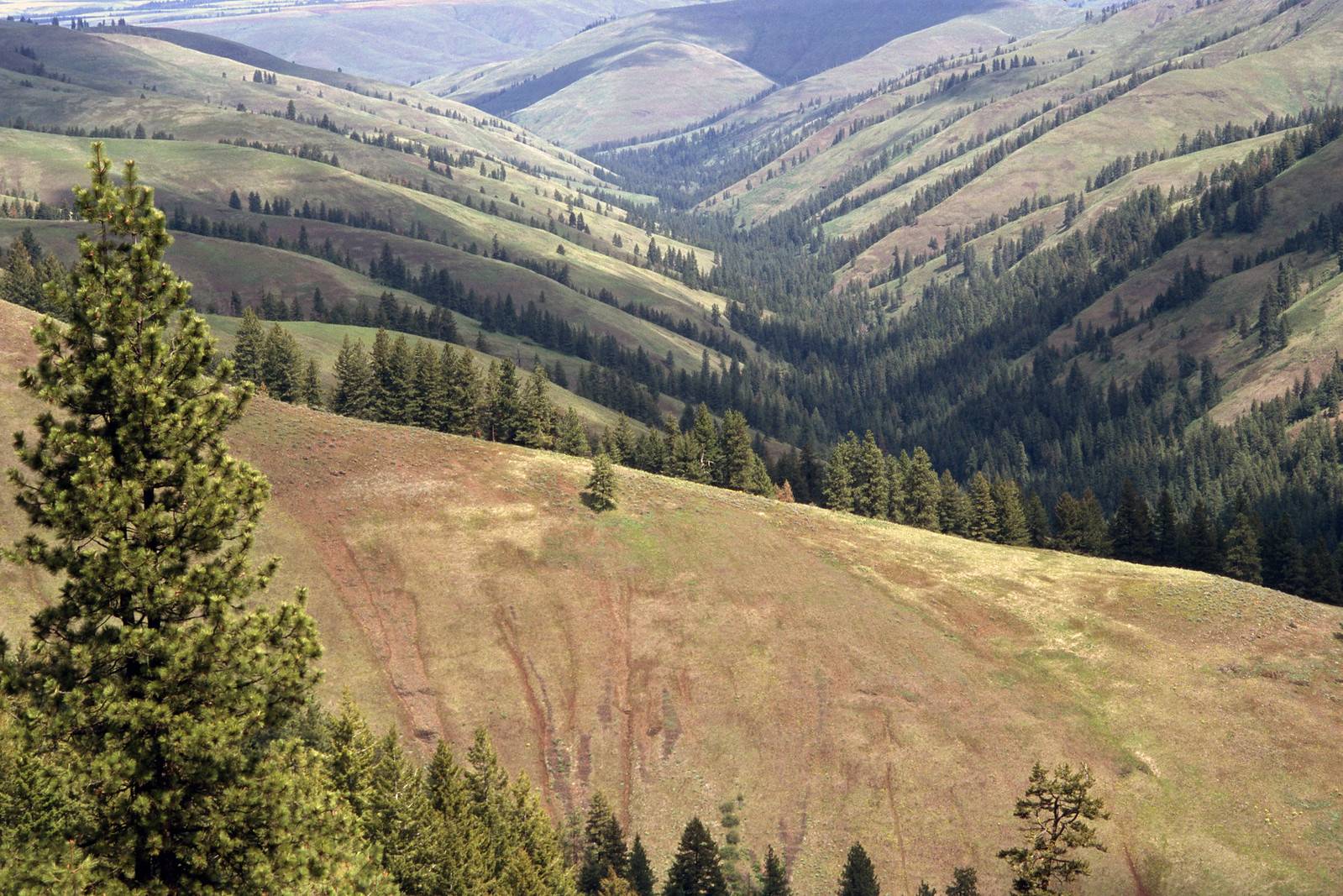
Dry grass slopes and ravines of the Umatilla Breaks, Umatilla National Forest, WashingtonPhoto: U.S. Forest Service- Pacific Northwest Region (Public Domain Mark 1.0)
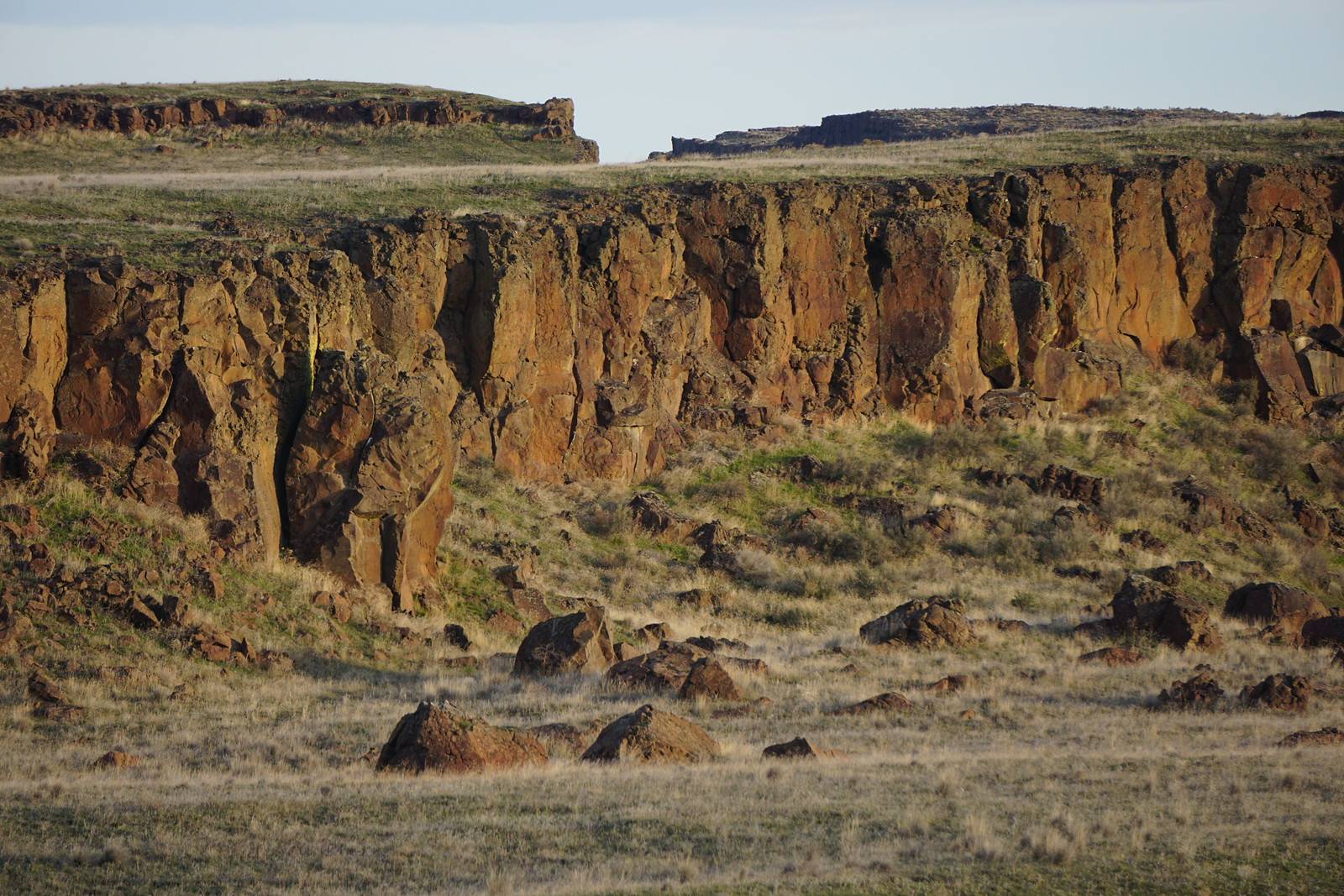
Basalt cliff and boulders on the Columbia National Wildlife Refuge, WashingtonPhoto: USFWS – Pacific Region (Public Domain Mark 1.0)

Steep dry canyon slopes in the Wenaha-Tucannon Wilderness, Umatilla National Forest, WashingtonPhoto: U.S. Forest Service- Pacific Northwest Region (Public Domain Mark 1.0)
Questions hunters ask
Can nonresidents apply for special permits?
Yes. The application costs $152.30, against $9.61 for a resident.
What does a visitor pay for a moose license?
$2,279 after a drawing, against $457.40 for a resident.
Is hunter education required for a visitor?
All individuals born after January 1, 1972 must show proof of a hunter education class before buying their first Washington hunting license. A once in a lifetime deferral is available.
What does a nonresident small game license cost?
$252.47, or $93.08 for the three-day license.
Is a Discover Pass needed?
A Discover Pass is required at State Parks and DNR-managed lands; annual hunting licenses include a Vehicle Access Pass for WDFW-managed lands.
May I bring a carcass in from outside Washington?
Whole carcasses of deer, elk and moose taken outside Washington may not be brought into the state, and only deboned meat, a clean skull and antlers and similar parts may be moved.
How long must I live in Washington to be a resident?
A person must have maintained a permanent place of abode in Washington for at least 90 days immediately before applying.
How much more does a visitor pay for deer?
Visitors pay $599.07, while residents pay $61.70.
How much more does a visitor pay for elk?
Visitors pay $685.60, while residents pay $69.29.
Sources: e-regulations license fees; 2026 big game pamphlet, PDF page 9; 2026 big game pamphlet, PDF page 8. Checked: each figure laid beside the WDFW text on November 23, 2026. Source dated September 28, 2026.
Read the pamphlet
Most Washington rules hang on a GMU, a goose area or a side of the Cascades, and where a page here read one it says so and links the pamphlet.
Other photos on this page: Intermountain Region US Forest Service (Public domain); Jason Crotty (CC BY 2.0); U.S. Forest Service- Pacific Northwest Region (Public Domain Mark 1.0); YellowstoneNPS (Public domain).