Home › Washington › Public land › Desert Wildlife Area Unit
Checked against agency data
Desert Wildlife Area Unit Washington
A WDFW wildlife area unit in Grant County, 62,601 acres, with WDFW holding the keys.
Updated November 25, 2026 · Source: Washington Department of Fish and Wildlife, Ducks Unlimited and RMEF
Regional scenery, California quail perched on a rock among grasses, Grant County, Washington, chosen because it lies close to Desert Wildlife Area Unit.
Photo: Greg Schechter (CC BY 2.0)
Route to Desert Wildlife Area Unit
Lots, gates and trailheads at Desert Wildlife Area Unit
- Potholes Reservoir Wildlife AreaParking · 2.2 mi from the centreDirections
- Fidesco-Harris 1 Water Access SiteParking · 2.6 mi from the centreDirections
- Potholes Reservoir Wildlife AreaParking · 2.9 mi from the centreDirections
- Fidesco-Harris 1 Water Access SiteParking · 3.0 mi from the centreDirections
- Desert Wildlife AreaParking · 3.2 mi from the centreDirections
- Desert Wildlife AreaParking · 3.2 mi from the centreDirections
- Potholes Reservoir Wildlife AreaParking · 3.2 mi from the centreDirections
- Desert Wildlife AreaParking · 3.4 mi from the centreDirections
- Desert Wildlife AreaParking · 3.6 mi from the centreDirections
Map points from OpenStreetMap contributors. Seasonal closures are common on public land roads, and the managing agency has the current status.
Desert Wildlife Area Unit in numbers and plain words
Desert Wildlife Area Unit is one of the units of the Columbia Basin Wildlife Area, 62,601 acres of WDFW ground in Grant County in GMUs 278 and 290.
Columbia Basin Wildlife Area is the wildlife area above this page, with 10 sister units such as Lower Crab Creek Unit, Quincy Lakes Unit and Banks Lake Unit.
Of 10 WDFW wildlife area units in Grant County, this one covers the most ground. The acre count follows the named source and suits comparing places, not legal work.
Marine View sits about 6 miles to the southeast, with Moses Lake (11 miles, northeast) and Royal City (12 miles, southwest) a little farther out.
Grant County is not short of public ground: 15 records, such as 1 WDFW wildlife area, 10 WDFW wildlife area units, 1 DNR state trust land and 1 national wildlife refuge.
Nearby
Places to hunt and shoot around Desert Wildlife Area Unit
Conduct and equipment on Desert Wildlife Area Unit
Below is the rulebook for Desert Wildlife Area Unit as the record carries it, in a table and then in sentences.
| Subject | Short version | Source text |
|---|---|---|
| Unit hunting note | Quoted below | WDFW unit page |
| Camping | 21 days in 30 | WAC 220-500-100 |
| Campfires | Up to 3 by 3 feet | WAC 220-500-110 |
| Blinds and stands | No nails, wire or staples | WAC 220-500-130 |
| Target shooting | Limited, see rule | WAC 220-500-140 |
| Closures | Posted notices rule | WAC 220-500-040 |
| Pass | Vehicle pass needed | WDFW unit page |
| Advisories | Quoted above | WDFW unit page |
WDFW's hunting note for this ground: Game Reserves Game Reserves are CLOSED AREAS where hunting and trapping for all wild animals and wild birds is prohibited (RCW 77.12.047). The Desert Unit provides excellent hunting opportunities for waterfowl, upland birds, and mule deer by special permit.
WAC 220-500-100 allows 21 days of camping in a 30-day window at Desert Wildlife Area Unit, with posted exceptions, and treats a residence camp as a public nuisance.
Keep a fire at Desert Wildlife Area Unit within 3 feet in diameter and 3 feet in height; the rule allows only stoves, lanterns and barbeques beyond that.
Building a blind at Desert Wildlife Area Unit follows WAC 220-500-130: no pits, no nails or staples in trees, and everything non-natural hauled out when the season ends.
Sighting in at Desert Wildlife Area Unit falls under WAC 220-500-140: an earthen backstop is required for firearms of .17 caliber or larger, and 500 feet must separate the shooter from buildings, campgrounds and viewing platforms.
WDFW may close or restrict Desert Wildlife Area Unit to protect people, wildlife or buildings, and it may limit how many users enter or on which days; entering during a posted restriction is unlawful.
A hunting license is enough for the vehicle at Desert Wildlife Area Unit, because the Vehicle Access Pass comes with it; a visitor without one buys a Discover Pass.
Before you go, note the advisory text: Camping There are no designated campgrounds or campground facilities on the Desert Unit. Unless otherwise posted, dispersed camping is allowed for 14 days within a 30-day period and campfires are allowed from October 1 through April.

Sandhill cranes standing on a plowed field with a lake behind, Grant County, WashingtonPhoto: Greg Schechter (CC BY 2.0)
Ground truth for Desert Wildlife Area Unit
In the words of the unit page, Desert Wildlife Area Unit looks like this: The Desert Unit is part of the Columbia Basin Wildlife Area and is located southwest of Moses Lake, in Grant County. The Desert Unit is entirely within the US Bureau of Reclamation (USBR), Columbia Basin Irrigation Project and includes Reclamation facilities such as Potholes Reservoir, the West Canal, Winchester and Frenchmen Wasteways, and associated irrigation canals and drains. The development of irrigation and agriculture within this desert environment from the 1950s through the 1980s created new wetlands and increased habitat productivity for waterfowl, upland birds, and mule deer, making this unit a destination for hunters across the state.
Beyond hunting, the unit page lists: This unit offers opportunities for hiking/walking. Recreationists walking dogs should be aware that from April through July, all dogs and other pets must be leashed.
Land management notes on the unit page: The Desert Unit is a combination of WDFW-owned land (about 1/3) and USBR-owned lands that are managed by WDFW through a 25-year Management Agreement (about 2/3). In addition to the conservation goals listed above, much of our land stewardship focus involves addressing dumping, vandalism, and unauthorized off-road vehicle activity.
The record of how the state got the land: The parcels making up this area were purchased between 1958 and 2020.
County harvest estimates near Desert Wildlife Area Unit
The most productive small game line for Grant County in 2025 is ducks: an estimated 62,468 taken, 3,542 hunters, 1st of 39 counties.
Geese in the late goose season follow at an estimated 12,662 for 2025.
| Animal | Estimated harvest | Hunters | Report |
|---|---|---|---|
| Pheasants | 4,881 | 1,766 | 2025 |
| Quail | 9,807 | 971 | 2025 |
| Chukar | 1,092 | 157 | 2025 |
| Gray partridge | 602 | 75 | 2025 |
| Ducks | 62,468 | 3,542 | 2025 |
| Late season geese | 12,662 | 1,816 | 2025 |
| September Canada geese | 1,820 | 251 | 2025 |
| Mourning doves | 10,812 | 573 | 2025 |
Fees for the license year: small game $55.13 for residents, $252.47 for nonresidents, deer $61.70 for residents.
WDFW small game harvest reports; every figure is an estimate for the year shown; deer, elk, bear and cougar harvest is reported by game management unit, never by county; checked November 23, 2026.
Unit numbers for Desert Wildlife Area Unit
The unit page ties Desert Wildlife Area Unit to GMUs 278 and 290; open a unit below to see the dates that use it.
| Unit | Region number | Side | Season lines | Draw hunts |
|---|---|---|---|---|
| GMU 278 Wahluke | 2 | East | 15 | 2 |
| GMU 290 Desert | 2 | East | 7 | 7 |
| GMU | Deer taken | Elk taken | Bear taken |
|---|---|---|---|
| GMU 278 Wahluke | 95 | 2 | 0 |
| GMU 290 Desert | 42 | 2 | – |
Unit headings from WDFW eRegulations; 2025 harvest from the WDFW game harvest reports; checked November 23, 2026.
Directions and base towns for Desert Wildlife Area Unit
Plot Desert Wildlife Area Unit at 47.0289, -119.4474. Search this point on Google Maps
Access points on the page for Desert Wildlife Area Unit: Dodson Road Fidesco-Harris Access Adams Road Road I SW.
On-site facilities, per the page: Parking areas Restrooms Boat launches.
The page gives 6653 Road K NE, Moses Lake, WA 98837 and 509-765-6641 as the contact for the area.
WDFW North Central – Region 2 office (Ephrata) sits 22 miles from Desert Wildlife Area Unit as the crow flies; the address is 1550 Alder Street NW, phone (509) 754-4624.
| Nearby town | Distance | Side | County |
|---|---|---|---|
| Marine View | 6 | Southeast | Grant |
| Moses Lake | 11 | Northeast | Grant |
| Royal City | 12 | Southwest | Grant |
| Moses Lake North | 13 | Northeast | Grant |
Desert Wildlife Area Unit in the agency data
| Label | Reading |
|---|---|
| Managed by | WDFW |
| WDFW region | Region 2, North Central |
| Acres on file | 62,601 |
| Boundary acres | 62,301 |
| Game units | GMUs 278 and 290 |
| Counties | Grant |
| Parent record | Yes |
| Record read | Nov. 23, 2026 |
The unit page gives 62,601 acres; the boundary layer's measured shape runs close to that.
Because the point sits inside the published boundary, distances from it are only a rough guide to the nearest gate.
What the county adds at Desert Wildlife Area Unit
No time zone line crosses Grant County: the whole county runs on PT.
Grant County lies in eastern Washington, and WDFW serves it from Region 2, North Central.
Grant County appears in 9 game management units, 1 deer and elk areas, 1 black bear management unit and 4 cougar hunt management units; the data never says how much of the county each covers.
Grant County falls under Area 4 for goose seasons; Washington has no duck zones, only goose areas.
For Grant County, the nearest WDFW office in the data is in Ephrata, 9 miles off.
| Kind | Total |
|---|---|
| Land records in county | 15 |
| Wdfw wildlife areas | 1 |
| Wdfw wildlife area units | 10 |
| Dnr state trust lands | 1 |
| National wildlife refuges | 1 |
| National monuments | 1 |
| National recreation areas | 1 |
Which dates count in Grant County
Each row below applies somewhere in Grant County, because its GMU list names the county or it is printed for all of Washington; the Where column says whether the row touches the county through GMUs.
County rows cannot see unit lines, so match the GMU for Desert Wildlife Area Unit before trusting a row that touches only some units.
| Quarry | Window | Paper needed | Reach | Start | Stop |
|---|---|---|---|---|---|
| White-tailed deer | Late archery | Deer license | Touching GMUs | Nov. 20, 2026 | Dec. 8, 2026 |
| White-tailed deer | Late muzzleloader | Deer license | Touching GMUs | Nov. 25, 2026 | Dec. 8, 2026 |
| Mule deer | Late archery | Deer license | Touching GMUs | Nov. 20, 2026 | Dec. 8, 2026 |
| Mule deer | Late muzzleloader | Deer license | Touching GMUs | Nov. 25, 2026 | Dec. 8, 2026 |
| Elk | Late muzzleloader | Elk license | Touching GMUs | Nov. 25, 2026 | Dec. 8, 2026 |
| Elk | Late archery | Elk license | Touching GMUs | Dec. 9, 2026 | Dec. 31, 2026 |
| Elk | Modern firearm | Elk license | Touching GMUs | Dec. 9, 2026 | Dec. 31, 2026 |
| Elk | Late muzzleloader | Elk license | Touching GMUs | Dec. 9, 2026 | Dec. 31, 2026 |
| Cougar | General | Cougar license | Statewide | Sept. 1, 2026 | March 31, 2027 |
| Turkey | Fall | Turkey tag | Touching GMUs | Sept. 1, 2026 | Dec. 31, 2026 |
| Turkey | Spring youth 2027 | Youth rules | Statewide | April 1, 2027 | April 7, 2027 |
| Turkey | Spring 2027 | Turkey tag | Statewide | April 15, 2027 | May 31, 2027 |
| Pheasant | Regular, east | Small game license | Eastern half | Oct. 17, 2026 | Jan. 18, 2027 |
| Chukar | Regular | Small game license | Eastern half | Oct. 3, 2026 | Jan. 31, 2027 |
| Gray partridge | Regular | Small game license | Eastern half | Oct. 3, 2026 | Jan. 18, 2027 |
| Quail and bobwhite | Regular, east | Small game license | Eastern half | Oct. 3, 2026 | Jan. 18, 2027 |
| Forest grouse | Regular | Small game license | Statewide | Sept. 15, 2026 | Jan. 15, 2027 |
| Rabbit and hare | Regular | Small game license | Statewide | Sept. 1, 2026 | March 15, 2027 |
| Crow | Regular | Small game license | Statewide | Sept. 1, 2026 | Dec. 31, 2026 |
| Snipe | Regular | Small game and permits | Statewide | Oct. 28, 2026 | Jan. 31, 2027 |
| Ducks | Regular | Small game and permits | Statewide | Oct. 28, 2026 | Jan. 31, 2027 |
| Ducks | Youth and veterans day | Small game and permits | Statewide | Feb. 6, 2027 | Feb. 6, 2027 |
| Scaup | Regular | Small game and permits | Statewide | Nov. 7, 2026 | Jan. 31, 2027 |
| Coot | Regular | Small game and permits | Statewide | Oct. 28, 2026 | Jan. 31, 2027 |
| Coot | Youth and veterans day | Small game and permits | Statewide | Feb. 6, 2027 | Feb. 6, 2027 |
| Geese | Regular | Small game and permits | Listed areas | Oct. 17, 2026 | Nov. 29, 2026 |
| Geese | White goose closure | Small game and permits | Listed areas | Nov. 30, 2026 | Dec. 22, 2026 |
| Geese | Regular | Small game and permits | Listed areas | Dec. 23, 2026 | Jan. 24, 2027 |
| Geese | Regular | Small game and permits | Listed areas | Jan. 25, 2027 | Jan. 31, 2027 |
| Geese | Youth and veterans day | Small game and permits | Listed areas | Feb. 6, 2027 | Feb. 6, 2027 |
| Geese | Late white goose | Small game and permits | Listed areas | Feb. 20, 2027 | March 10, 2027 |
| Bobcat | Regular | Hunting license | Statewide | Sept. 1, 2026 | March 15, 2027 |
| Raccoon | Regular | Hunting license | Statewide | Sept. 1, 2026 | March 15, 2027 |
| Red and gray fox | Regular | Hunting license | Nearly statewide | Sept. 1, 2026 | March 15, 2027 |
| Coyote | Year-round | Hunting license | Statewide | Jan. 1, 2026 | Dec. 31, 2026 |
From the 2026 big game pamphlet and the WDFW e-regulations seasons (Washington Department of Fish and Wildlife), checked November 23, 2026.
Classes and banquets nearby
6 Washington events sit on the calendar for Desert Wildlife Area Unit.
| Date | Event | Town |
|---|---|---|
| Feb. 20, 2027 | Dinner and banquet | Ephrata |
| March 8, 2027 | Classroom course | Moses Lake |
| April 10, 2027 | Banquet | Moses Lake |
| April 12, 2027 | Classroom course | Moses Lake |
| May 1, 2027 | Field skills evaluation | Quincy |
| July 6, 2027 | Classroom course | Moses Lake |
Listings read November 23, 2026; times are Pacific.
Nearby tracts to try instead of Desert Wildlife Area Unit
If Desert Wildlife Area Unit is crowded, the table lists alternatives close by.
| Record | Kind | Miles | Which way | Acres |
|---|---|---|---|---|
| Columbia National Wildlife Refuge | Wildlife refuge | 10 | Southeast | 53,968 |
| National monument | 23 | South | 163,515 | |
| Thompson Seeps Unit | Wildlife area unit | 26 | South | 1,808 |
| Bailie Wildlife Area Unit | Wildlife area unit | 30 | Southeast | 3,926 |
| Sunnyside-Snake River Wildlife Area | Wildlife area | 30 | Southeast | 21,500 |
| Whiskey Dick Unit | Wildlife area unit | 31 | West | 27,938 |
| LT Murray Wildlife Area | Wildlife area | 32 | West | 118,300 |
| Sagebrush Flat Wildlife Area | Wildlife area | 33 | North | 14,100 |
Other WDFW wildlife area units in the same county: Lower Crab Creek Wildlife Area Unit (24,809 acres), Quincy Lakes Wildlife Area Unit (17,724 acres), Banks Lake Wildlife Area Unit (17,064 acres), Gloyd Seeps Wildlife Area Unit (11,341 acres).
Where Desert Wildlife Area Unit sits among other public land
Nearby ranges
Othello Gun Club comes first, 18 miles from the property point.
Where to take game near Desert Wildlife Area Unit
Cards below list 3 sporting goods stores, 2 taxidermists and 1 meat processor within about 20 miles of Desert Wildlife Area Unit, each with a phone and a map link.
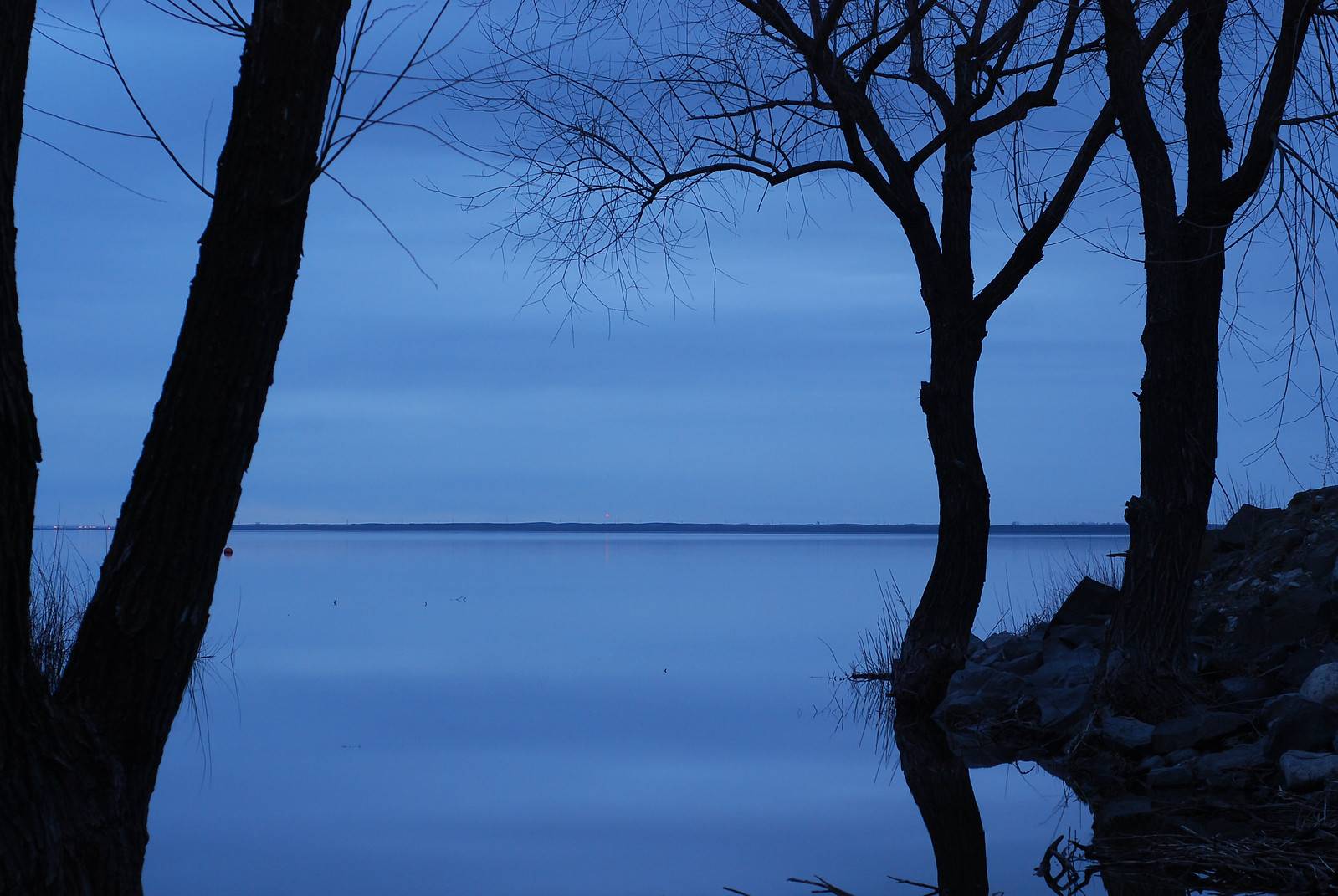
Potholes Reservoir at dusk with bare trees against a blue sky, Grant County, WashingtonPhoto: Steve Voght (CC BY-SA 2.0)
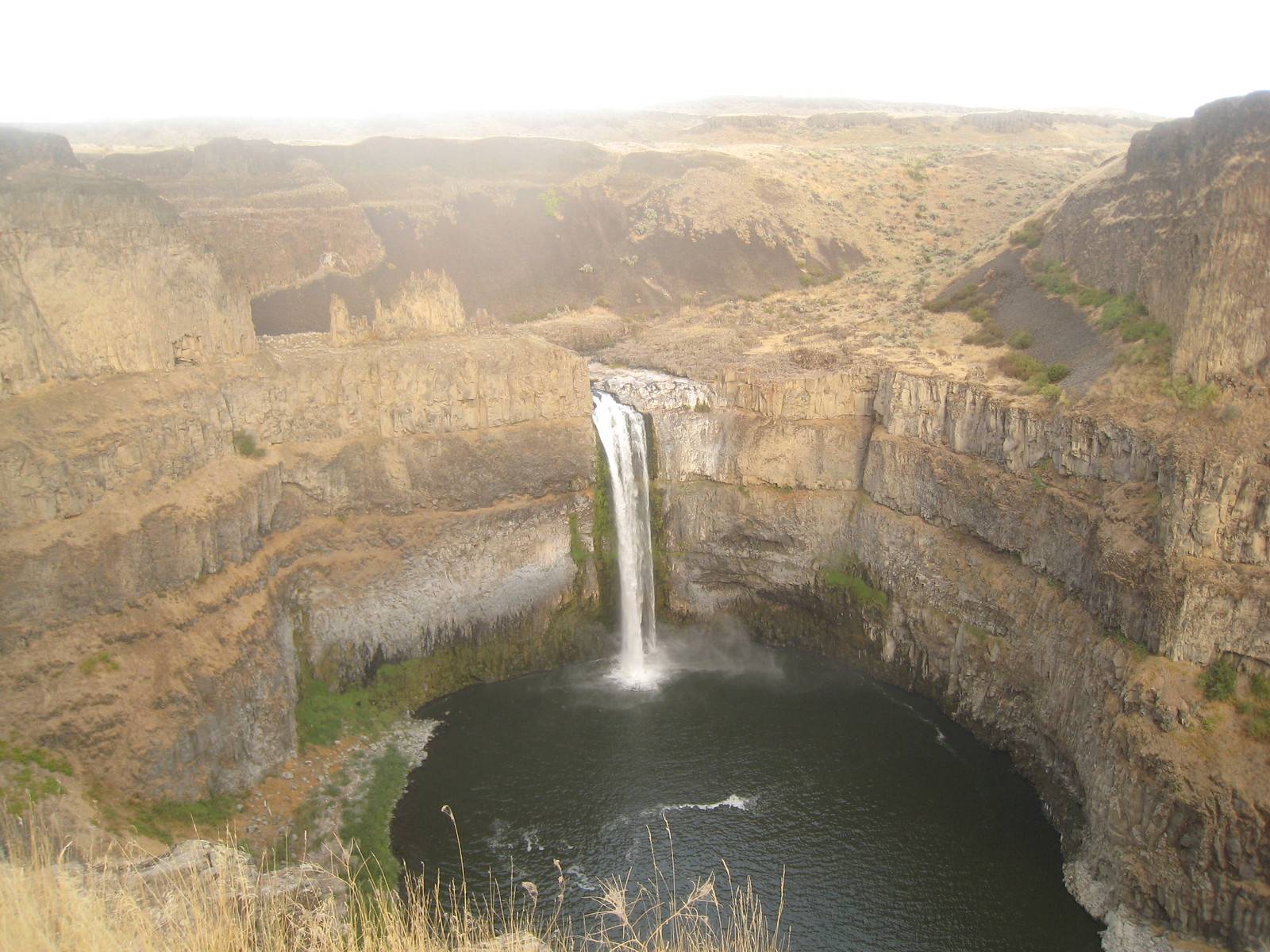
Palouse Falls dropping into a basalt gorge, Franklin County, WashingtonPhoto: Chris M Morris (CC BY 2.0)
Grassy slope of Badger Mountain under blue sky, Benton County, WashingtonPhoto: Gnawme (CC BY 2.0)
Desert Wildlife Area Unit: questions with short answers
Does Desert Wildlife Area Unit open its gates to licensed hunters?
Desert Wildlife Area Unit is state wildlife land open to licensed hunters, so you can walk in with a valid license and the vehicle pass, subject to closures that WDFW posts.
Is there a parking fee or pass tied to Desert Wildlife Area Unit?
Buy the hunting license and the Vehicle Access Pass comes with it; without one, a Discover Pass is the pass for WDFW land like Desert Wildlife Area Unit.
Which license and how much, for a hunt near Desert Wildlife Area Unit?
For a hunt near Desert Wildlife Area Unit: $61.70 resident deer, $55.13 resident small game, $252.47 nonresident small game, all within the fee table that ends March 31, 2027.
Which seasons have an open window in Grant County?
White-tailed deer, Mule deer, Elk, Cougar, Turkey and Pheasant have windows open on November 25, 2026 in Grant County.
What shooting hours should I plan around at Desert Wildlife Area Unit?
For big game the window is one-half hour before sunrise to one-half hour after sunset; for turkey, migratory game birds and upland birds it ends at sunset. Worked out for the county center on November 25, 2026, big game hours run 6:45 a.m. PT to 4:45 p.m. PT.
How many nights can a hunter stay at Desert Wildlife Area Unit?
WDFW land allows camping up to 21 days in any 30-day period unless a posted notice says otherwise, and campfires must stay within 3 by 3 feet.
What limits apply to zeroing a rifle at Desert Wildlife Area Unit?
Target practice at Desert Wildlife Area Unit is limited to designated areas or a safe backstop, with 500 feet kept clear of buildings; ranges are the better choice.
What game management unit number goes with Desert Wildlife Area Unit?
Use GMUs 278 and 290 when you read the season rows for Desert Wildlife Area Unit.
Which roads lead into Desert Wildlife Area Unit?
Use Dodson Road Fidesco-Harris Access Adams Road Road I SW to reach Desert Wildlife Area Unit, and read the access advisory before the drive.
Where should I base myself for Desert Wildlife Area Unit?
Marine View lies about 6 miles from the point on file for Desert Wildlife Area Unit, and each nearby town has its own hunting page.
What orange or pink rule applies when hunting Desert Wildlife Area Unit?
The state requirement is as follows. A minimum of 400 square inches of fluorescent hunter orange and/or fluorescent hunter pink exterior clothing worn above the waist and visible from all sides; a hat alone does not meet the requirement; a combination of both colors may be used. Not required while hunting in a unit limited to muzzleloading or archery with a valid muzzleloader or archery deer or elk tag; required for archers and muzzleloaders in areas that overlap modern firearm deer or elk seasons (including archery hunters in GMUs marked h).
Is Desert Wildlife Area Unit part of a larger holding?
Its parent is Columbia Basin Wildlife Area, 160,100 acres in all, and the child acres sit inside that number.
Do the tagging rules change at Desert Wildlife Area Unit?
After a harvest, follow this: Tag the animal immediately (paper tag: cut out the month and day of kill; electronic: notch in MyWDFW and write the confirmation number and date on durable material attached to the carcass); evidence of sex must stay naturally attached; the tag must stay with the meat until eaten (WAC 220-413-020, 220-413-090).
What is the contact for Desert Wildlife Area Unit?
Call 509-765-6641 or write to 6653 Road K NE, Moses Lake, WA 98837; that is the office the unit page lists.
Verify before driving to Desert Wildlife Area Unit
Whatever hangs on the gate at Desert Wildlife Area Unit beats every sentence printed here.
Sources: WDFW wildlife area page, WDFW boundary layer and Washington Administrative Code; seasons from the 2026 WDFW big game pamphlet. Checked November 23, 2026.
Other photos on this page: Greg Schechter (CC BY 2.0).